
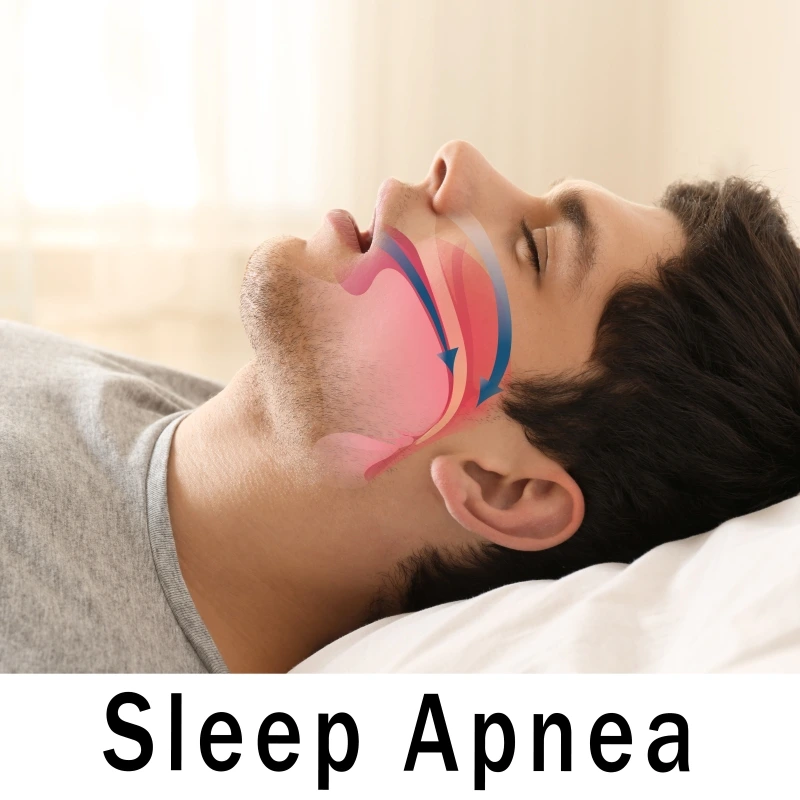
Sleep apnea is a sleep-related breathing disorder where a person’s breathing repeatedly stops, pauses, or becomes severely restricted during sleep. These pauses can last for several seconds to a minute and may happen many times throughout the night.
Because the brain senses a drop in oxygen, it briefly wakes the body up to resume breathing. This constant cycle of restricted breathing and brief awakenings severely disrupts sleep quality, preventing you from reaching the deep, restorative stages of sleep.
For dental professionals, obstructive sleep apnea (OSA) is the most relevant form of the condition. OSA occurs when the tissues in the back of the throat collapse or the tongue falls backward, physically blocking the airway. Understanding this mechanical blockage is key to understanding how certain dental approaches can help keep the airway open.
Many people who have sleep apnea do not realize it because the primary symptoms occur while they are asleep. Often, it is a partner or family member who first notices the signs.
Symptoms that may warrant a discussion with a healthcare professional can include:
It is important to note that experiencing snoring and sleep apnea symptoms does not automatically mean you have the condition. Snoring is very common and can have other causes. However, if you or a loved one notice several of these signs, a thorough sleep apnea evaluation by a medical professional is recommended.


There are three main types of sleep apnea. Treatment depends heavily on the specific type and severity of your condition.
Dental care is generally only considered for obstructive sleep apnea, as it involves the physical positioning of the jaw and airway.
For many patients, oral appliance therapy for sleep apnea is a comfortable, effective way to manage their OSA.
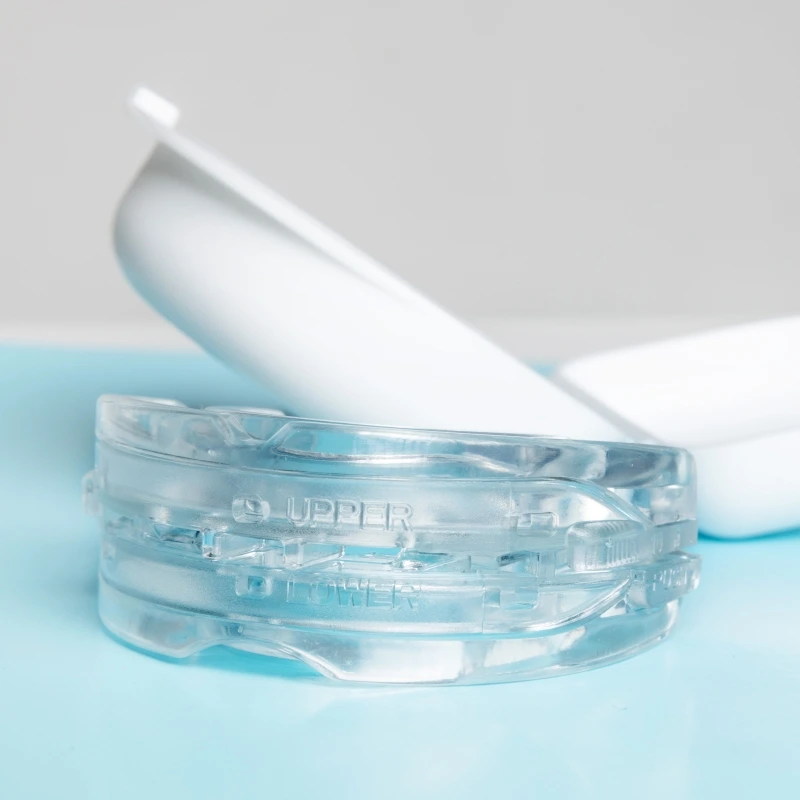
A sleep apnea oral appliance is a custom-fitted, removable dental device worn only while you sleep. It looks similar to a sports mouthguard or an orthodontic retainer. The appliance works by gently shifting and stabilizing the lower jaw slightly forward. This repositioning can help prevent the tongue and soft tissues in the back of the throat from collapsing, thereby maintaining a more open airway.
Oral appliance therapy may be appropriate for patients with mild to moderate obstructive sleep apnea, or for those with severe OSA who cannot tolerate other treatments. However, it is not suitable for everyone, and a thorough dental and medical evaluation is required to determine if it is right for you.
At Dental Associates of Connecticut, we make it easy to find trusted, high-quality dental care close to home, school, or work. With convenient locations in Danbury, Fairfield, New Milford, Newtown, and Shelton, our dental teams are here to care for patients and families throughout Connecticut.
Care for children, teens, adults and seniors.
Complete care under one trusted roof.
More than 50 years of caring for Connecticut.
We accept most major dental insurance plans.
Sleep apnea is a medical condition where breathing repeatedly stops or becomes very shallow during sleep. The most common type is obstructive sleep apnea (OSA), which occurs when the tissues in the throat temporarily collapse and block the airway.
Common signs include loud snoring, waking up gasping or choking, witnessed pauses in breathing, morning headaches, dry mouth upon waking, and persistent daytime fatigue. However, these symptoms can have other causes, so a proper medical evaluation is necessary.
Yes, after you receive a medical diagnosis of obstructive sleep apnea from a physician, a dentist who focuses on sleep therapy can evaluate you for certain dental treatments, such as an oral appliance, to help manage your condition safely and effectively.
An oral appliance is a custom-fitted, removable dental device worn during sleep. It is designed to hold the lower jaw slightly forward, which can help prevent the airway from collapsing and reduce disruptions in breathing.
In some cases, yes. Oral appliances may be recommended for patients with mild to moderate obstructive sleep apnea, or for individuals with severe OSA who cannot tolerate wearing a CPAP mask. Your healthcare provider will help determine which treatment is most appropriate for you.
If you suspect you have sleep apnea, your first step should generally be a medical evaluation and sleep study with a doctor. Once diagnosed, you can then consult with our dental team to discuss if dental treatment can be a part of your prescribed care plan.